
Stop Self-Sabotage: 4 Science-Backed Ways
Today we have to talk about how to stop self-sabotage. I’m Dr. Karin Nordin, PhD expert in mindset and behavior change. If you’ve tried self-help techniques and they haven’t worked, it’s likely because they weren’t evidence-based enough. Today I’m sharing 4 evidence-based ways to identify and stop self-sabotage before it derails your goals.
Prefer to watch instead of read? Watch here:
1. Stop Self-Sabotage by Identifying Your Upper Limit
Think of your behavior like a thermometer. It’s easiest to understand this with money. Let’s say the most you’ve ever had in your bank account is $5,000, and the lowest was -$250. That range is what your brain is used to — it’s your comfort zone for that area of life. When you start pushing past those limits, your brain resists. So when you get close to $5,000, you might start spending money like crazy, possibly even subconsciously, because your brain is trying to pull you back to familiar territory.
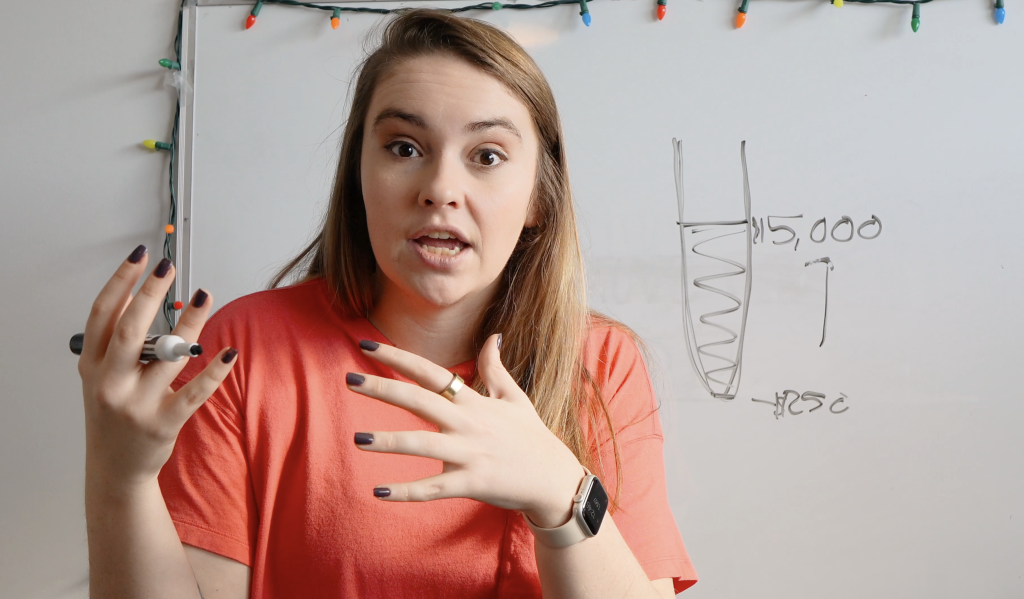
Let’s use another example. Say you’re working out consistently but always self-sabotage and stop. How many days in a row were you able to go before things fell apart? That’s your upper limit. By identifying it, you’ll know when it’s approaching — so the next time you get close, you can start watching for the signs of self-sabotage before they take over.
2. Recognize Your Personal Warning Signs
Now that you know your upper limit, how will you recognize when you’re getting close to it? Maybe it’s when your bank account hits $4,000. Or when you’ve worked out a certain number of days in a row. What’s the first thing you normally start doing — or saying to yourself — when self-sabotage begins?
Maybe you hear yourself say: “This one purchase doesn’t matter.” Or: “Things are going so well, I can let this one day slide.” Think about your personal red alert signs and write them down. The more clearly you can see them coming, the easier it is to catch yourself before the pattern takes hold.
3. Uncover What Your Brain Thinks Is Dangerous
There are many things our brain considers dangerous about reaching a goal — even things that feel positive or empowering on the surface. One of the core reasons we self-sabotage is that our brain is actually trying to protect us from what it perceives as a threat.
For example: say your goal is to lose weight. What might your brain consider dangerous about that success? Perhaps you think people will pay more attention to you. Your brain might worry that some friends will react negatively. Or there’s a fear that something will go wrong and you’ll end up disappointing yourself. Identify what feels dangerous so you can bring it into the open — and become truly aware of what you’re actually afraid of.
4. Stop Self-Sabotage by Practicing Mindfulness
You’ll notice that most of these tips center on awareness — and that’s intentional. When it comes to self-sabotage, it’s not always about doing something differently. It’s about being conscious of what’s happening so that when self-sabotage starts, you can make a pivot.
Mindfulness isn’t just about sitting in daily meditation. Fundamentally, it’s about acknowledging what’s going on in your mind and body and developing a heightened state of awareness. That might look like noticing your emotions — and when you start feeling “I can’t do this” or feel the pull to self-sabotage to avoid disappointment, a consistent mindfulness practice gives you the pause you need to choose differently. Even just setting aside a few moments throughout the day to check in with yourself can make a real difference.
One More Thing: Break Down Your Goal First
If your goal feels overwhelming or unmanageable, that could itself be a driver of self-sabotage — your brain decides it’s too big and scary to even attempt. Learning to break your goal down into clear, achievable steps is one of the most powerful things you can do. That’s exactly what we work on inside the Change Academy.
And by the way — self-sabotage is something I deal with personally too. It’s something I actively work to identify and manage in my own life. You’re not alone in this.